
Iteration, Imperfection, and the Future of Cultural Institutions

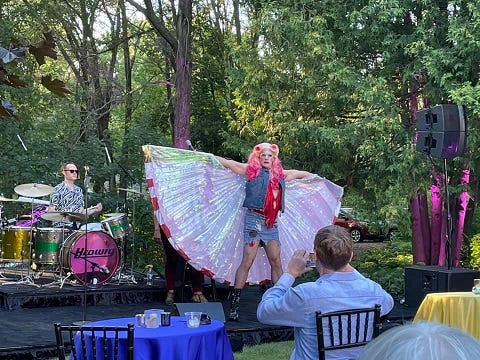
The pandemic forced arts organizations into a prolonged rupture that exposed both fragility and resilience. Performance halls went dark. Galleries shuttered. Entire seasons dissolved almost overnight. In response, many organizations did innovate. They live-streamed performances, built digital exhibitions, experimented on social platforms, and created hybrid programming models.
Yet compared with other sectors, innovation in the arts often felt halting, uneven, or reactive rather than generative. The obstacle was not only technological or financial. It was cultural. Particularly in the performing arts, our challenge was rooted in a deeply held instinct to create work that is fully realized, polished, and beautiful before it meets the public.
For many institutions, the presentation of finished work is inseparable from mission and identity. A premiere is not a prototype. An exhibition opening is not a beta test. Years of training reinforce the value of refinement through rehearsal and revision. Crucially, that refinement happens in private (mostly). The audience encounter is meant to be transcendent, not iterative.
During the pandemic, the conditions that make polish possible such as time, funding, physical co-presence, and technical infrastructure were suddenly disrupted or unavailable. Organizations were pushed into unfamiliar territory. Some shared works in progress online. Others tested new formats without guarantees of quality. If programming was shared, it was produced under constraints that made perfection impossible.
Other sectors facing similar instability often turn to design thinking. Design thinking privileges speed, iteration, and learning through making and failing small and cheaply. Its logic is cyclical: prototype, test, fail, refine, repeat. Value is generated not only from successful outcomes but from the insights gained through imperfect trials. A rough pilot or a glitchy digital product is not an embarrassment. It is a data point.
Some arts organizations struggled to adopt this mindset because it runs counter to artistic norms. Releasing something unfinished can feel like a compromise of standards, a diminishment of artistic integrity, or even a breach of trust with audiences. Instead of pursuing small, low-risk experiments, other organizations made sweeping changes without the benefit of iterative learning. There was a palpable desire to swing for the fences and use the pandemic as an opportunity for a large-scale reset. Rather than launching a series of contained pilots to gather live data and refine ideas in real time, final decisions were often made at mass scale and under pressure.
This approach concentrated risk. Organizations assumed the full burden of untested ideas without incremental feedback. When large initiatives faltered, there was little room to adjust without significant financial, reputational, or relational cost.
Urgency helps explain this pattern. The pandemic disrupted traditional models so completely that incrementalism felt inadequate. Survival seemed to demand transformation, not tinkering. But transformation without iteration often replicates the fragilities it seeks to overcome. Without structured feedback loops, organizations lose the opportunity to refine assumptions, recalibrate strategy, and build stakeholder trust gradually. In some cases, institutions moved so quickly and so far that audiences and communities felt left behind.
And yet, the pandemic also revealed the generative potential of prototyping. Organizations that embraced rapid experimentation such as pop-up outdoor performances, short-form digital commissions, and participatory online workshops often discovered new audiences and new forms of relevance. Constraints enabled agility. Small tests replaced large bets. Feedback loops shortened. Innovation emerged not from grand reinvention but from the accumulation of small, imperfect attempts.
This is where the philosophy of wabi-sabi offers a bridge. Rooted in Japanese aesthetics, wabi-sabi honors impermanence, incompletion, and imperfection. It finds beauty in asymmetry, wear, and transience. Rather than seeing the unfinished as deficient, wabi-sabi frames it as alive and marked by process.
During the pandemic, livestream lag, domestic backdrops, and improvised production values inadvertently embodied this aesthetic. Audiences glimpsed artists’ living rooms and rehearsal spaces. The boundary between polished performance and lived reality softened. Imperfection did not always diminish meaning. Sometimes it deepened it.
If design thinking provides a methodology for rapid prototyping, wabi-sabi provides emotional permission. Together they challenge the arts sector’s attachment to immaculate completion. They suggest that unfinished work can be meaningful, that process can be visible, and that audiences can value authenticity alongside excellence.
In the years following the pandemic, many institutions have understandably sought to return to quality by restoring grandeur and finish. Polish signals recovery, stability, and professionalism. But a full reversion risks losing the experimental capacities developed under duress.
The question is not whether arts organizations can innovate. They proved they can. The question is whether they can reconcile innovation with their devotion to beautifully finished work.
A synthesis is possible. Finished productions need not disappear, but they can be complemented by iterative laboratories, public rehearsals, digital pilots, and community co-creation. In such a model, perfection and prototyping are not adversaries. The polish of the final work is strengthened by the openness of the process that precedes it.
The pandemic did more than disrupt operations. It exposed an aesthetic ideology. It forced the arts sector to confront a deeper question: Where does beauty reside? Only in the flawless premiere, or also in the fragile experiment?
Design thinking urges us to move faster and experiment more. Wabi-sabi reminds us that imperfection is not failure but form. Between these poles lies a more expansive creative practice, one capable of innovation without abandoning the pursuit of beauty.
What I appreciate about this post is that you are trying to loop some threads together about how change, innovation, and imperfection can work together.
I’ve been concerned that theaters have lost the appreciation of making great art and taking big swings. This is what made some of the great artistic leaders so good and followed. They didn’t get everything right. Jim Nicola will tell you he had plenty of flops. But when lightning struck and art opened up the soul, those are the moments I live for.